
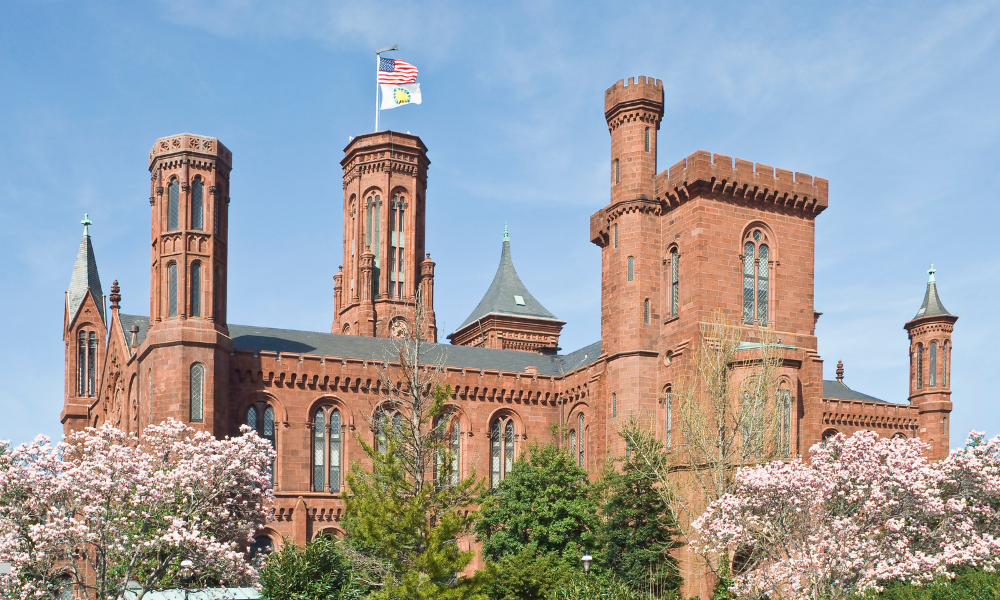
You could visit Washington, D.C. for the Smithsonian museums alone and still leave with places you didn’t have time to see. The Smithsonian Institution includes museums, galleries, gardens, research facilities, and the National Zoo, with many of its most famous attractions clustered around the National Mall. Visitors can see everything from dinosaur fossils and spacecraft to presidential artifacts, groundbreaking works of art, and objects that tell the story of American history and culture. The hard part isn’t finding a Smithsonian museum in Washington, D.C. worth visiting. It’s deciding which ones deserve a place on your itinerary.
This guide will help you choose the best Smithsonian museums for your interests, understand where they’re located, and plan a visit without spending your entire Washington vacation racing from museum to museum.
Are the Smithsonian Museums Free?
One of the best things about visiting the Smithsonian is that admission to most Smithsonian museums and the National Zoo is free. However, free admission does not always mean you can simply walk in. Some locations may require free timed-entry passes, and policies can change because of special exhibitions, renovations, crowd management, or other circumstances. Always check the individual museum’s official Smithsonian page shortly before your visit.
How Many Smithsonian Museums Are There?
The Smithsonian Institution operates more than 20 museums and the National Zoo, although not all are located on the National Mall or even in Washington, D.C. Many first-time visitors focus on the large group of Smithsonian museums around the Mall, where several major attractions are within walking distance of one another. But don’t let their proximity fool you! These are enormous museums. Being able to walk from one to another doesn’t mean you’ll realistically have time to explore five of them in a day.
Which Smithsonian Museums Should You Visit?
Start with your interests rather than somebody else’s list of “must-see” museums. If you love space exploration, prioritize Air and Space. If your children want dinosaurs, go to Natural History. If you’re fascinated by American culture and presidential history, American History deserves your time. Here are some of the most popular options.
National Air and Space Museum
The Smithsonian’s National Air and Space Museum is one of Washington’s most famous attractions. Its collections explore aviation and spaceflight, allowing visitors to encounter objects connected to some of humanity’s biggest achievements in the air and beyond. This is an especially strong choice for:
- Families
- Aviation enthusiasts
- Space enthusiasts
- Science and technology fans
- First-time D.C. visitors
Because of the museum’s popularity and ongoing transformation, check its current exhibition availability and entry requirements before visiting.
National Museum of Natural History
Dinosaurs. Gems. Animals. Oceans. Human origins. The National Museum of Natural History is one of the easiest Smithsonian recommendations for families because its collections cover subjects that appeal to an enormous range of ages and interests. Highlights include the David H. Koch Hall of Fossils – Deep Time and the famous Hope Diamond.
National Museum of American History
If you want to understand the United States through the objects Americans created, used, wore, watched, and remembered, put the National Museum of American History on your list. Its enormous collections cover politics, culture, innovation, entertainment, transportation, military history, and everyday American life. It’s also home to one of the Smithsonian’s most significant objects: the Star-Spangled Banner.
National Museum of African American History and Culture
The National Museum of African American History and Culture explores African American history and its fundamental role in the broader American story. Its collections and exhibitions address subjects including slavery and freedom, segregation, civil rights, culture, community, music, military service, sports, and contemporary life. This is a museum where you’ll want to allow meaningful time rather than squeezing it between several other attractions.
National Museum of the American Indian
Located near the U.S. Capitol, the National Museum of the American Indian explores the histories, cultures, art, and contemporary lives of Indigenous peoples throughout the Western Hemisphere. The building itself is distinctive, with its curving limestone exterior standing apart from many of the classical buildings surrounding the National Mall. Another reason to visit? Food. The museum’s Mitsitam Native Foods Cafe draws inspiration from Indigenous cuisines and food traditions, making it one of the more distinctive museum dining options on the Mall.
National Museum of African Art
The National Museum of African Art houses works representing cultures and artistic traditions from across the African continent. It’s also considerably smaller than some of the Smithsonian’s blockbuster museums, making it easier to incorporate into a day without committing several hours.
National Museum of Asian Art
The Smithsonian’s National Museum of Asian Art includes the Freer Gallery of Art and Arthur M. Sackler Gallery. Its collections span thousands of years and encompass art from across Asia. The museum’s location near the Smithsonian Castle and central portion of the National Mall also makes it convenient to pair with other nearby attractions.
Hirshhorn Museum and Sculpture Garden
Modern and contemporary art fans should make time for the Hirshhorn. Its distinctive circular building is easy to recognize on the National Mall, while its collections and exhibitions offer something very different from Washington’s history-heavy attractions. Don’t forget the outdoor Sculpture Garden.
Smithsonian American Art Museum
The Smithsonian American Art Museum explores American life and culture through art spanning centuries. Unlike most of the Smithsonian museums tourists associate with the National Mall, SAAM is located in the Penn Quarter/Chinatown area. That can actually be an advantage. Pair it with restaurants, the National Portrait Gallery, or an evening elsewhere downtown.
National Portrait Gallery
Sharing a building with the Smithsonian American Art Museum, the National Portrait Gallery tells American history through the people who shaped it. One of its most popular attractions is the America’s Presidents exhibition, which includes portraits of U.S. presidents.
Renwick Gallery
Located near the White House, the Renwick Gallery focuses on American craft and decorative arts. Its smaller size makes it a useful addition when you want a museum experience without committing half a day.
Smithsonian’s National Zoo
The Smithsonian experience extends well beyond museum walls. The National Zoo covers 163 acres in northwest Washington and is home to thousands of animals representing hundreds of species. For families, it can provide a welcome change after several days of monuments and indoor museums. Just remember: visiting the zoo involves plenty of walking.
Best Smithsonian Museums for Kids
If you’re visiting Washington, D.C. with kids, don’t choose museums simply because adults think children should see them. Choose places that connect with what your kids already love. Some particularly family-friendly choices include:
- National Museum of Natural History for dinosaurs, animals, gems, and science
- National Air and Space Museum for airplanes, rockets, astronauts, and space
- National Museum of American History for familiar objects and interactive family spaces
- National Museum of the American Indian for culture, history, and family-oriented experiences
- National Zoo for an outdoor day with animals
With younger children, one great museum can be far more successful than three rushed ones.
Best Smithsonian Museums for History Lovers
Washington is an extraordinary destination for anyone interested in history. Depending on the subjects that fascinate you most, consider:
- National Museum of American History
- National Museum of African American History and Culture
- National Museum of the American Indian
- National Portrait Gallery
- National Postal Museum
Remember that history isn’t contained in one Smithsonian building. Different museums tell different pieces of the American and global story.
Best Smithsonian Museums for Art Lovers
If art is your priority, don’t spend your entire trip on the National Mall’s history museums.
Consider visiting:
- National Gallery of Art*
- Smithsonian American Art Museum
- National Portrait Gallery
- National Museum of Asian Art
- National Museum of African Art
- Hirshhorn Museum and Sculpture Garden
- Renwick Gallery
*One useful distinction: the National Gallery of Art is located on the National Mall and is free to visit, but it is not part of the Smithsonian Institution. That’s a common source of confusion for visitors.
How Many Smithsonian Museums Can You Visit in One Day?
Technically? Several.
Should you? Probably not.
For most visitors, one major museum plus one smaller museum makes a comfortable museum-focused day. Two major museums can also work if you don’t intend to explore every gallery. Trying to thoroughly visit Natural History, Air and Space, American History, and African American History and Culture in one day would be exhausting for most people. Remember to account for:
- Security screening
- Walking between museums
- Meals
- Bathrooms
- Museum fatigue
- Gift shops
- Timed-entry reservations
- Stops that unexpectedly capture your attention
Leave room for discovery.
A One-Day Smithsonian Itinerary
If you only have one Smithsonian day on your private tour of D.C., don’t try to conquer the institution. Start with one museum that’s an absolute priority. For a first-time family, that might be Natural History or Air and Space. Spend the morning exploring rather than watching the clock every 20 minutes. Have lunch on or near the National Mall. In the afternoon, visit a second museum with a different focus. Pairing Natural History with American History, for example, gives you two very different experiences without requiring a major change in location. Finish the day with a walk around the National Mall rather than squeezing in a third enormous museum.
A Two-Day Smithsonian Itinerary
With two days, you have considerably more flexibility.
- Day One: Science + American History
Spend the morning at the National Museum of Natural History or National Air and Space Museum. After lunch, visit the National Museum of American History.
- Day Two: Culture + Art
Dedicate a substantial portion of the day to the National Museum of African American History and Culture or National Museum of the American Indian. Then choose an art museum or gallery for the afternoon. Again, these are frameworks, not rules. The best Smithsonian itinerary is built around what you actually want to see.
Where Should You Eat During a Smithsonian Museum Day?
You don’t necessarily need to leave the National Mall for lunch. Several Smithsonian museums have cafés, and some are worth visiting in their own right. Mitsitam Native Foods Cafe at the National Museum of the American Indian is one notable option. Eating inside or near your current museum can also save valuable sightseeing time. If you’d rather leave the Mall for a sit-down meal, Penn Quarter and downtown offer considerably more choices. The most important thing is to check where you’ll actually be at lunchtime. The National Mall is much larger than it appears on a map, and walking 20 minutes for lunch may not sound nearly as appealing after several hours inside a museum.
Tips for Visiting Smithsonian Museums With Kids
A Smithsonian day with children doesn’t need to become an endurance test. A few simple strategies can make a big difference:
- Let children help choose the museums
- Identify a few must-see exhibits beforehand
- Don’t insist on seeing every gallery
- Schedule breaks
- Eat before everyone becomes exhausted and hungry
- Alternate museums with outdoor sightseeing
- Bring a stroller for younger children when appropriate
- Check family programs before visiting
- Leave time for the gift shop if that’s important to your children
- Ask kids what they want to find before entering the museum
Sometimes giving a child a mission—”Let’s find the Hope Diamond” or “Let’s go see the dinosaurs”—is more engaging than announcing that you’re spending three hours learning about natural history.
What Should You Bring to the Smithsonian Museums?
Keep it relatively light. Anything you bring may be carried around for hours. Consider:
- Comfortable walking shoes
- Refillable water bottle
- Portable phone charger
- Small day bag
- Necessary medications
- Stroller if traveling with younger children
- Screenshots or copies of timed-entry passes
- A light layer for air-conditioned buildings
Before visiting, check current security and bag policies for each museum on your itinerary.
Are Smithsonian Museums Within Walking Distance of Each Other?
Many are. Natural History, American History, Air and Space, the Hirshhorn, National Museum of Asian Art, National Museum of African Art, and National Museum of the American Indian are all located around the National Mall. But “walking distance” means something different after you’ve already spent four hours on your feet. Other Smithsonian attractions, including the National Zoo, National Portrait Gallery, Smithsonian American Art Museum, and Renwick Gallery, are elsewhere in Washington. Always check locations before planning your day with your custom private tour company.
What’s the Best Time to Visit the Smithsonian Museums?
Weekday mornings can be a good choice when your schedule allows. Weekends, holidays, school breaks, spring travel season, and summer can bring heavier crowds. Popular museums can also become increasingly busy as the day progresses. If one museum is especially important to you, consider making it your first stop rather than hoping to squeeze it in later.
Can You Visit the Smithsonian and the Monuments on the Same Day?
Absolutely. And this is often a better approach than spending the entire day indoors. For example, you might visit a museum in the morning, have lunch, and then spend the afternoon exploring the Washington Monument, World War II Memorial, Lincoln Memorial, and other landmarks. Mixing indoor and outdoor sightseeing also provides variety, especially for families. Just don’t underestimate the walking involved!
Do You Need a Tour Guide for the Smithsonian?
You can certainly explore the Smithsonian museums independently. But a great Washington trip isn’t only about getting through museum doors. Deciding which museums fit your interests, coordinating them with monuments and other attractions, handling transportation, accounting for timed entries, and building a realistic itinerary can be more complicated. That’s where thoughtful trip planning can make a difference. A private Washington experience with an expert D.C. tour guide can combine Smithsonian museums with monuments, historic sites, neighborhoods, meals, and other attractions without making your vacation feel like a race through a checklist.
Plan Your Smithsonian Visit Around You
There isn’t one “best” Smithsonian itinerary. A family traveling with dinosaur-obsessed children should have a different day than a couple fascinated by American political history. An art lover shouldn’t spend three days following somebody else’s list of must-see science museums. That’s the advantage of visiting a city with this much to offer. Tiber Creek Private Tours helps visitors create Washington experiences around what they genuinely want to see and learn. Whether the Smithsonian is the centerpiece of your vacation or one part of a larger D.C. itinerary, we can help you determine what deserves your time, and what you can happily save for your next visit. Contact us today!