
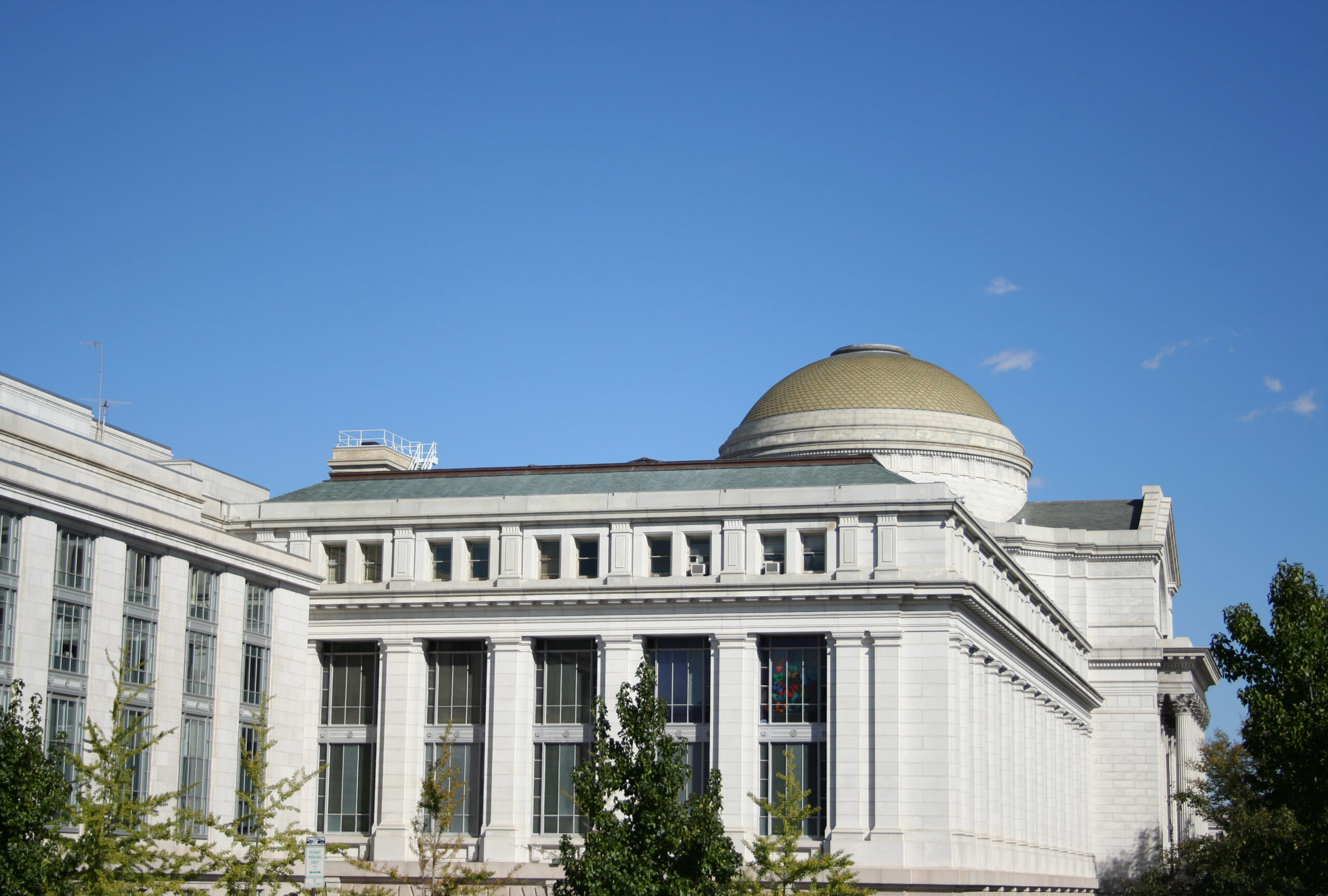
What can a 200-year-old flag, an ancient gemstone, a presidential portrait, and an airplane made of wood and fabric tell us about history? At the Smithsonian Institution in Washington, DC, the answer is almost everything.
The Smithsonian’s museums contain millions of objects spanning natural history, science, aviation, art, culture, and the American experience. But for visitors with limited time, deciding which museums to explore can be overwhelming. Instead of attempting to see everything, consider a different approach: Discover the one object that captures the spirit of each Smithsonian museum.
Some are world-famous artifacts. Others are works of art, scientific specimens, or objects that tell extraordinary human stories. Together, they offer a fascinating introduction to the Smithsonian’s collections and help you decide which museums deserve a place on your Washington, DC itinerary.
1. National Museum of American History: The Original Star-Spangled Banner
Defining object: The flag that inspired America’s national anthem
Few artifacts capture the American experience as powerfully as the original Star-Spangled Banner. This enormous flag flew over Fort McHenry in Baltimore during the War of 1812. After witnessing the British bombardment of the fort in September 1814, Francis Scott Key was inspired to write the poem that eventually became the lyrics of the national anthem. The flag originally measured approximately 30 by 42 feet and featured 15 stars and 15 stripes. Today, the surviving flag measures approximately 30 by 34 feet.
Displayed in a specially controlled environment to protect its fragile fabric, the Star-Spangled Banner connects visitors to a pivotal moment in American history.
Why it defines the museum: The National Museum of American History explores the objects, experiences, and ideas that shaped the United States. The flag represents the nation’s history, resilience, and evolving understanding of its identity.
Suggested visit: 1.5–2.5 hours.
2. National Museum of Natural History: The Hope Diamond
Defining object: A 45.52-carat blue diamond
The Hope Diamond is one of the world’s most famous gemstones, known for its extraordinary blue color, complicated history, and legendary reputation. Weighing 45.52 carats, the diamond has passed through the hands of royalty, wealthy collectors, and prominent jewelers. Its striking color comes from trace amounts of boron within the diamond’s crystal structure. Beyond its beauty, the Hope Diamond illustrates the scientific processes that create minerals deep within the Earth.
Why it defines the museum: The National Museum of Natural History explores Earth’s geological history, biodiversity, and natural processes. The Hope Diamond combines scientific significance with an extraordinary human story.
Suggested visit: 2–3 hours.
3. National Air and Space Museum: The 1903 Wright Flyer
Defining object: The airplane that changed transportation forever
On December 17, 1903, Orville Wright piloted the Wright brothers’ aircraft during the first successful controlled, sustained flight of a powered, heavier-than-air machine. The flight lasted only 12 seconds and covered approximately 120 feet. Yet this modest achievement transformed the future of transportation, exploration, and technology. The original Wright Flyer, constructed primarily from wood and fabric, represents years of experimentation and engineering innovation.
Why it defines the museum: The National Air and Space Museum tells the story of humanity’s determination to overcome physical boundaries. The Wright Flyer marks the beginning of powered aviation and the technological advances that eventually carried humans into space.
Suggested visit: 2–3 hours.
4. National Museum of African American History and Culture: Harriet Tubman’s Shawl
Defining object: A shawl associated with one of America’s most courageous freedom fighters
Among the Smithsonian’s most meaningful historical artifacts is a shawl associated with Harriet Tubman, the abolitionist who escaped slavery and repeatedly risked her life helping others reach freedom. The shawl is traditionally associated with a gift from Queen Victoria.
Unlike monumental sculptures or enormous historical artifacts, this personal textile reminds visitors that history is also preserved through the belongings of individual people. Tubman’s life encompassed far more than her work on the Underground Railroad. She also served the Union cause during the Civil War and advocated for women’s rights.
Why it defines the museum: The National Museum of African American History and Culture documents African American experiences, achievements, struggles, and contributions. Tubman’s shawl represents personal courage, the fight for freedom, and the power of individual action.
Suggested visit: 3–4 hours or longer.
Planning note: Free timed-entry passes are required. Confirm the shawl’s display status before visiting.
5. National Museum of the American Indian: The Inukshuk
Defining object: A stone landmark representing Indigenous knowledge and connection to place
An inukshuk is a stone structure associated with Inuit traditions and landscapes. Such structures can serve practical purposes, including navigation and communication across expansive Arctic environments.
The Smithsonian’s National Museum of the American Indian includes an inukshuk among the meaningful features of its museum landscape. It offers a useful starting point for understanding how Indigenous peoples have developed knowledge systems, cultural traditions, and relationships with their environments.
Why it defines the museum: The National Museum of the American Indian emphasizes the histories, cultures, and continuing contributions of Indigenous peoples throughout the Western Hemisphere. The inukshuk reminds visitors that knowledge can be preserved and communicated through objects, landscapes, and traditions.
Suggested visit: 1.5–2.5 hours.
6. National Museum of Asian Art: The Peacock Room
Defining object: James McNeill Whistler’s extraordinary decorative interior
The Peacock Room is one of the Smithsonian’s most remarkable artistic environments.
Originally created as a dining room in London, the space was transformed by American artist James McNeill Whistler during the 1870s. Its elaborate blue-and-gold decoration, painted peacocks, and display of Asian ceramics demonstrate the complex artistic exchanges between Europe, America, and Asia. The room later became part of the collection of Charles Lang Freer, whose gift helped establish the Smithsonian’s first museum dedicated to art.
Why it defines the museum: The National Museum of Asian Art explores artistic traditions and cultural connections across centuries. The Peacock Room illustrates how objects, aesthetics, and artistic ideas travel between cultures.
Suggested visit: 1–2 hours.
7. National Museum of African Art: A Yoruba Gelede Mask
Defining object: A ceremonial mask representing artistic expression and cultural tradition
Gelede masks are associated with Yoruba cultural traditions in West Africa, particularly communities in present-day Nigeria and neighboring countries. These carved works are part of performance traditions involving dance, music, elaborate costumes, and social commentary. Their artistic details can communicate ideas about community life, social relationships, and spiritual beliefs. The Smithsonian’s National Museum of African Art holds examples of Yoruba masking traditions, although individual objects may rotate on and off display.
Why it defines the museum: African art cannot be understood solely through visual appearance. Objects frequently have relationships with performance, ceremony, community, and cultural knowledge.
A Gelede mask illustrates the importance of understanding both artistic craftsmanship and cultural context.
Suggested visit: 1–1.5 hours.
8. National Portrait Gallery: The Lansdowne Portrait of George Washington
Defining object: Gilbert Stuart’s full-length portrait of America’s first president
Painted by Gilbert Stuart in 1796, the Lansdowne portrait presents George Washington as a civilian leader rather than a military commander. The painting is filled with symbolic details, including books, architectural elements, and objects associated with government. Washington’s outstretched hand and formal surroundings emphasize the importance of leadership and constitutional government.
Why it defines the museum: The National Portrait Gallery explores American history through the people who shaped it.
The Lansdowne portrait demonstrates that portraits do more than preserve someone’s appearance. They communicate ideas about identity, leadership, power, and historical memory.
Suggested visit: 1–2 hours.
9. Smithsonian American Art Museum: The Throne of the Third Heaven of the Nations’ Millennium General Assembly
Defining object: James Hampton’s extraordinary visionary artwork
Created over approximately 14 years by self-taught artist James Hampton, this elaborate sculptural installation is constructed from discarded materials, including furniture, cardboard, paper, and metallic foil. The work consists of numerous interconnected elements arranged into an elaborate religious environment. Hampton created the installation privately, and it was discovered after his death in 1964. Today, it is regarded as an extraordinary example of American visionary art.
Why it defines the museum: The Smithsonian American Art Museum explores the diversity of artistic expression in the United States.
Hampton’s installation demonstrates that remarkable art can emerge outside formal artistic institutions and traditional training.
Suggested visit: 1.5–2 hours.
10. Hirshhorn Museum and Sculpture Garden: Yayoi Kusama’s Infinity Mirror Rooms
Defining artwork: An immersive environment that challenges how visitors perceive space
Japanese artist Yayoi Kusama is internationally recognized for immersive installations that use mirrors, light, and repetition to create the illusion of endless space. Her Infinity Mirror Rooms have become among the most recognizable experiences in contemporary art.
Rather than simply viewing a painting or sculpture, visitors enter an environment where the boundaries between artwork, space, and observer appear to dissolve.
Why it defines the museum: The Hirshhorn is dedicated to modern and contemporary art that challenges conventional ideas and encourages new ways of seeing. Kusama’s work illustrates how contemporary artists transform the visitor’s relationship with an artwork.
Suggested visit: 1–2 hours.
Planning note: Infinity Mirror Room exhibitions are not continuously available. Confirm current exhibitions before planning a visit specifically to see Kusama’s work.
11. Renwick Gallery: Ghost Clock by Wendell Castle
Defining object: A sculpture that makes wood appear to be something else
At first glance, Wendell Castle’s Ghost Clock looks like a grandfather clock covered by a white sheet. Look closer, however, and you’ll discover that the entire work is carved from a single piece of mahogany.
Created in 1985, the sculpture demonstrates remarkable craftsmanship and plays with the viewer’s assumptions about materials and appearance.
Why it defines the museum: The Renwick Gallery celebrates American craft and decorative arts, exploring the intersection of artistic imagination, materials, and technical skill. Ghost Clock perfectly demonstrates how an everyday object can become an extraordinary work of art.
Suggested visit: 45–90 minutes.
12. National Postal Museum: The Inverted Jenny Stamp
Defining object: One of the most famous printing mistakes in American history
The Inverted Jenny is a 1918 U.S. postage stamp featuring a Curtiss JN-4 airplane printed upside down. Only one sheet of 100 stamps with this error was discovered, making the Inverted Jenny one of the most famous rarities in American philately. The stamp commemorated the introduction of airmail service, connecting the history of communication with early aviation.
Why it defines the museum: The National Postal Museum explores how communication systems helped connect communities, expand commerce, and shape American society. The Inverted Jenny illustrates how even a tiny postage stamp can reveal an extraordinary story about technology, history, and collecting.
Suggested visit: 1–1.5 hours.
Planning note: The museum’s holdings include Inverted Jenny material, but specific display arrangements should be confirmed before visiting.
13. Anacostia Community Museum: The Community Story
Defining collection: Objects that preserve the history of Washington’s neighborhoods
Unlike museums built around a single famous artifact, the Anacostia Community Museum focuses on the experiences of communities and the forces that shape urban life.
Its collections include photographs, documents, personal belongings, and other materials that preserve stories of neighborhood identity, social change, and community activism.
For this museum, the defining object is not necessarily a permanent masterpiece. It may be an ordinary item whose significance comes from the person or community connected to it.
Why it defines the museum: The Anacostia Community Museum demonstrates that history is not limited to presidents, wars, and famous inventions. Everyday experiences and community movements also shape the nation’s story.
Best for: Local history enthusiasts, cultural travelers, and visitors interested in Washington beyond the National Mall.
Suggested visit: 1–1.5 hours.
Explore the Anacostia Community Museum
14. Steven F. Udvar-Hazy Center: Space Shuttle Discovery
Defining object: A spacecraft that helped transform human space exploration
Located near Washington Dulles International Airport in Chantilly, Virginia, the Steven F. Udvar-Hazy Center is part of the Smithsonian’s National Air and Space Museum. Its most recognizable artifact is Space Shuttle Discovery. Discovery completed 39 missions between 1984 and 2011, spending approximately 365 days in space. The spacecraft played important roles in scientific research, satellite deployment, and missions to the International Space Station. It also carried the Hubble Space Telescope into orbit in 1990.
Why it defines the museum: Discovery represents the achievements, complexities, and ambitions of the Space Shuttle program.
Its enormous scale also makes the Udvar-Hazy Center an extraordinary destination for visitors interested in aviation and space exploration.
Suggested visit: 2–3 hours, excluding transportation from Washington.
15. National Museum of the American Latino: The Objects Behind Latino American History
Defining collection: Artifacts documenting Latino contributions to American life
The Smithsonian’s National Museum of the American Latino is being developed to share the histories, cultures, and contributions of Latino communities in the United States. Its collections and exhibitions explore topics such as migration, identity, community, politics, art, and cultural achievement. Rather than selecting a single permanent defining artifact before the museum’s full exhibition program is established, visitors can explore objects and stories presented through its current exhibitions and digital resources.
Why it defines the museum: The museum highlights the importance of Latino experiences within the broader American story.
Planning note: The Molina Family Latino Gallery in the National Museum of American History is temporarily closed for transformation as of October 2026, with special events continuing. Confirm current visitor access before making plans.
How to Choose Which Smithsonian Museums to Visit
If you have only one or two days in Washington, visiting every Smithsonian museum isn’t realistic.
Instead, prioritize the museums that match your interests.
| Your Interests | Museums to Prioritize |
|---|---|
| American history | American History, African American History and Culture |
| Science and technology | Air and Space, Natural History |
| Presidential history | National Portrait Gallery, American History |
| Fine art | American Art Museum, National Museum of Asian Art |
| Contemporary art | Hirshhorn, Renwick Gallery |
| Global cultures | African Art, American Indian, Asian Art |
| Aviation and space exploration | Air and Space, Udvar-Hazy Center |
| Lesser-known Washington experiences | Postal Museum, Anacostia Community Museum |
Suggested Smithsonian Museum Itineraries
The Essential Smithsonian Experience: One Day
- National Museum of Natural History
- National Museum of American History
- National Air and Space Museum
Choose a few priority exhibits at each location rather than attempting to explore every gallery.
The Art Lover’s Smithsonian Itinerary: One Day
- National Portrait Gallery
- Smithsonian American Art Museum
- Renwick Gallery
This itinerary combines museums with relatively convenient downtown locations.
The History Enthusiast’s Smithsonian Itinerary: Two Days
Day 1:
- National Museum of American History
- National Museum of African American History and Culture
Day 2:
- National Portrait Gallery
- National Museum of the American Indian
Allow sufficient time for the African American History and Culture Museum, which contains extensive exhibitions.
Discover Washington’s Museums With Tiber Creek Private Tours
The Smithsonian museums offer an extraordinary opportunity to explore history, science, art, and culture. But with so many remarkable collections, choosing where to spend your time can be challenging.
At Tiber Creek Private Tours, we help visitors create personalized Washington, DC sightseeing experiences that reflect their interests. Whether you’re fascinated by presidential history, aviation, American culture, or world-class art, a customized itinerary can combine museum visits with Washington’s iconic monuments, historic neighborhoods, and other attractions.
Our private tours offer knowledgeable guides, comfortable transportation, and flexible scheduling, helping you make the most of your time in the nation’s capital.
Ready to explore Washington beyond the typical sightseeing itinerary?
Contact Tiber Creek Private Tours to plan your personalized Washington, DC experience.
Exhibitions, individual artifact displays, opening hours, and timed-entry requirements may change. Always confirm availability through the Smithsonian before your visit.